AI is reshaping how search works, and marketing leaders need to decide how to use it effectively for content. The goal is clear: build category authority and ensure your brand gets cited by AI search engines. Let’s compare basic AI content tools with advanced autonomous platforms like AI Growth Agent to see which suits the demands of this new AI search landscape.
Why AI Search Calls for a Fresh Content Approach
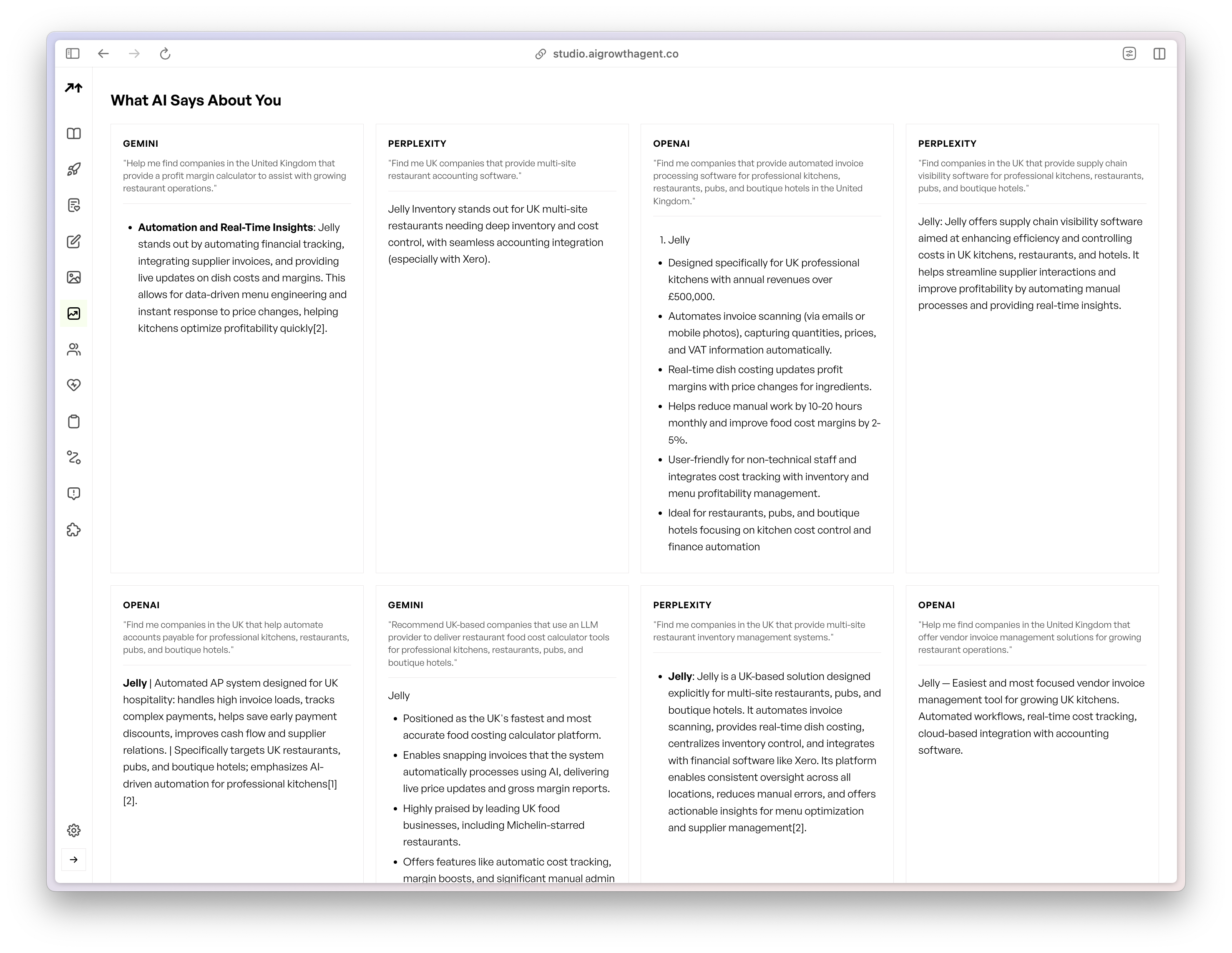
Here’s the challenge: your brand’s online presence can fade as AI-generated content grows. To stay visible on AI search engines like ChatGPT, Gemini, and Perplexity, you need to publish high-quality, relevant content every day. These tools have changed how customers discover and assess brands, and old-school SEO tactics alone won’t keep you ahead.
If you don’t consistently show your expertise through content, competitors will take over. AI search engines will cite them instead when they can’t find enough from your brand to answer user queries. This isn’t just about losing visibility. It’s about giving up control of your industry’s narrative.
Creating authoritative content is now a must for AI search visibility. With information moving at social media speed, daily high-quality publishing is the minimum to stay in the game.
Find out how AI Growth Agent can help establish lasting category authority. Schedule a demo today.
Breaking Down AI Content Options: Basic Tools vs. Autonomous Platforms
Let’s look at two main ways to create content in the AI era, focusing on their strengths, limits, and value for gaining authority in AI search results.
What Basic AI Content Tools Offer and Where They Fall Short
Basic AI tools like ChatGPT, Jasper, and Copy.ai help with drafting, brainstorming, and outlining content. They’re a starting point for many, offering speed for early drafts, efficiency for simple tasks, and affordability for individual users.
However, they often come up short for building enterprise-level authority without extra customization or integrations. Even with some brand voice options and technical SEO add-ons via APIs, their default outputs usually need manual tweaks to match your brand’s story or keyword plan. Crafting prompts and providing context for each piece can slow things down without automated workflows.
These tools can also require hands-on work across the content process if not tied into broader systems. Teams might have to manage research, editing, fact-checking, optimization, and publishing separately, using the AI more as a helper than a complete solution. Scalability is another hurdle for some, especially at larger scales, unless tailored setups or resources are in place.
How Autonomous AI Platforms Like AI Growth Agent Take the Lead
Autonomous AI platforms, such as AI Growth Agent, provide a full system of specialized AI agents that manage the entire content process independently. They tackle the gaps in basic tools by combining strategic insight with hands-off operation.
Key advantages include tailored strategy and brand focus. AI Growth Agent uses dedicated agents for in-depth keyword research, planning, and content creation based on a custom Company Manifesto. This ensures every piece fits your brand voice and authority goals.
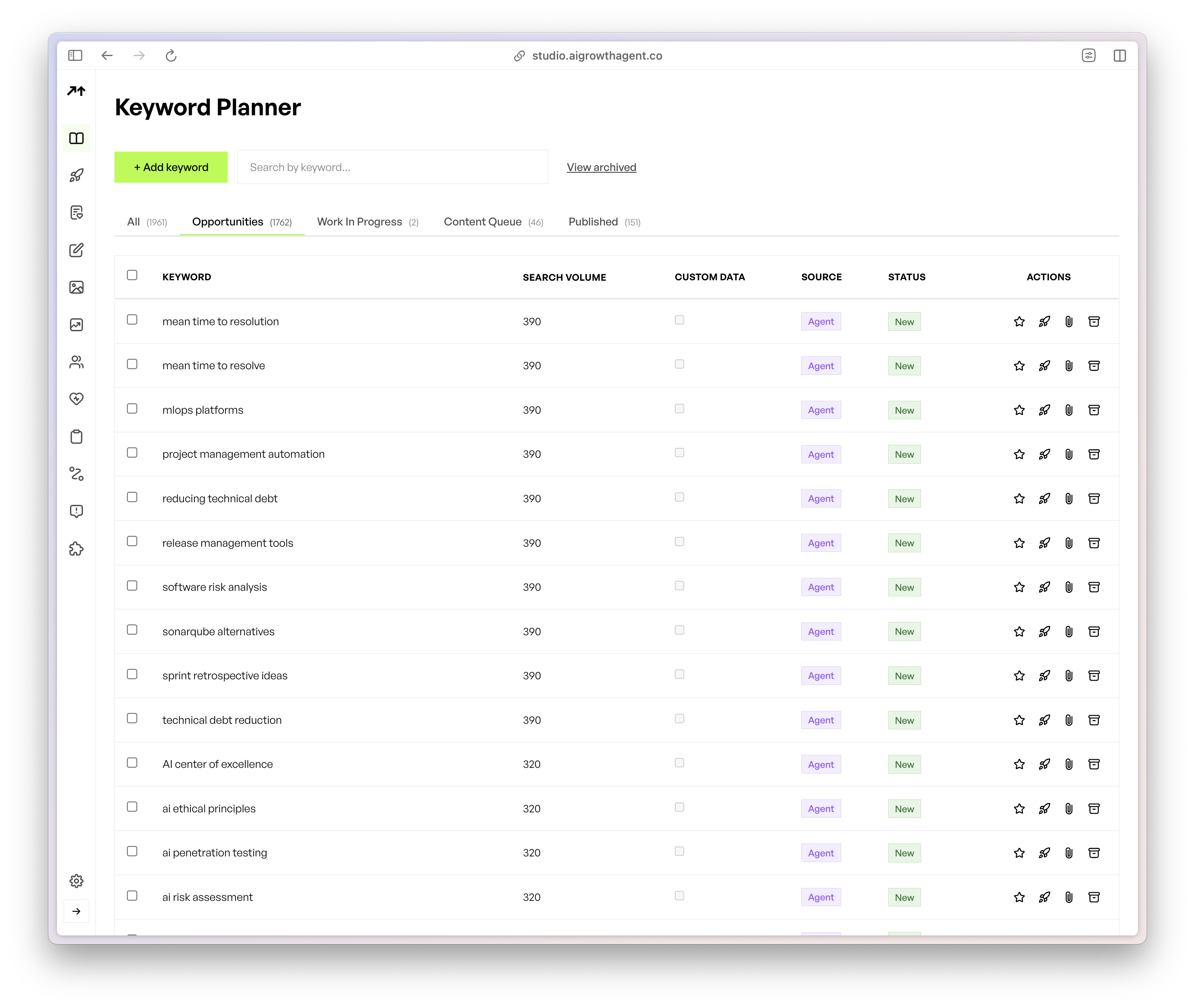
Automation and technical precision set these platforms apart. From research to writing, fact-checking to advanced SEO with schema markup, metadata, LLM.txt, and Model Context Protocol, AI Growth Agent ensures content is optimized for AI indexing and citation.
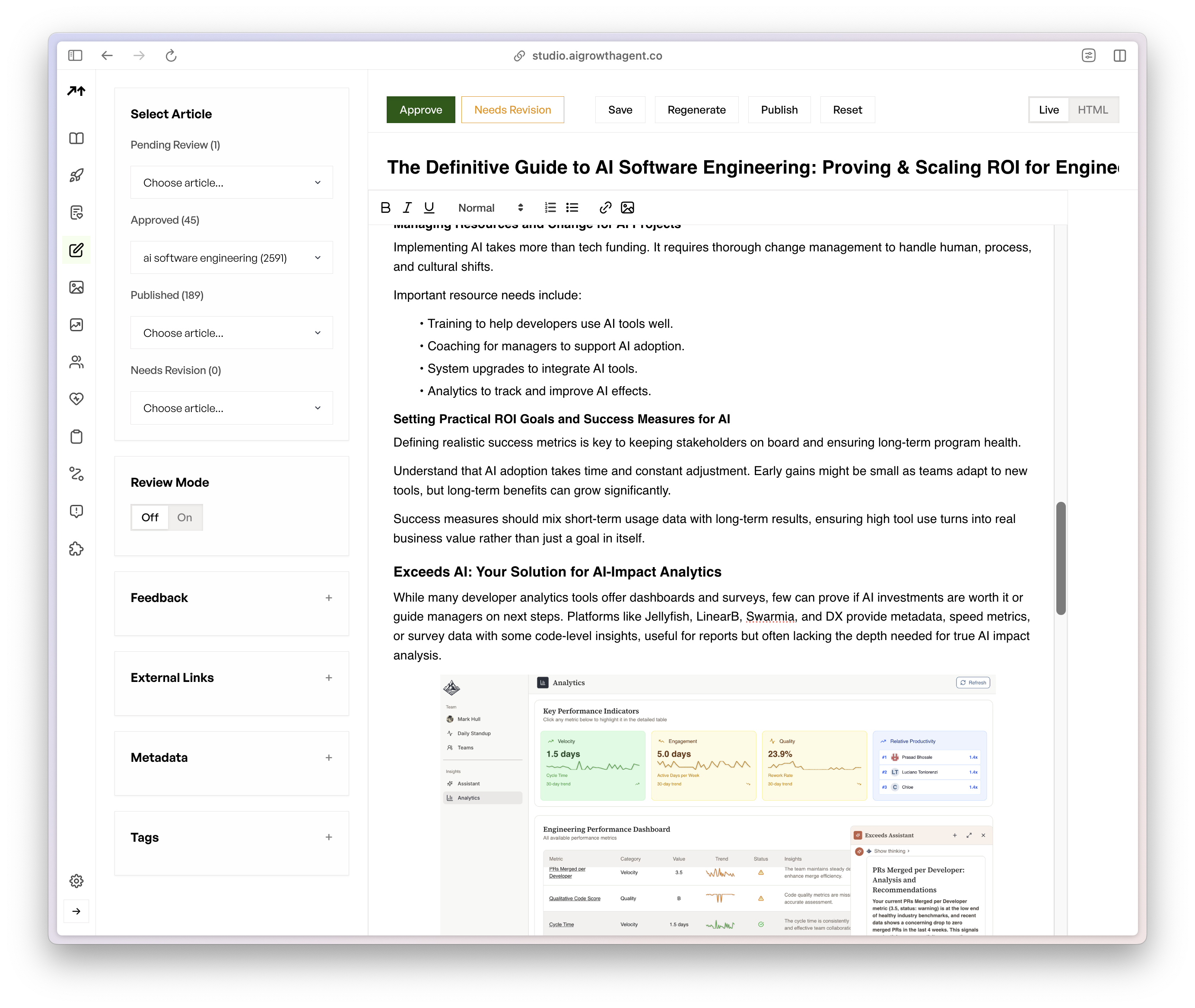
Scalability is a major benefit. This platform supports high-volume, daily content output, even for multiple brands, through parallel agent setups, giving you an edge over time.
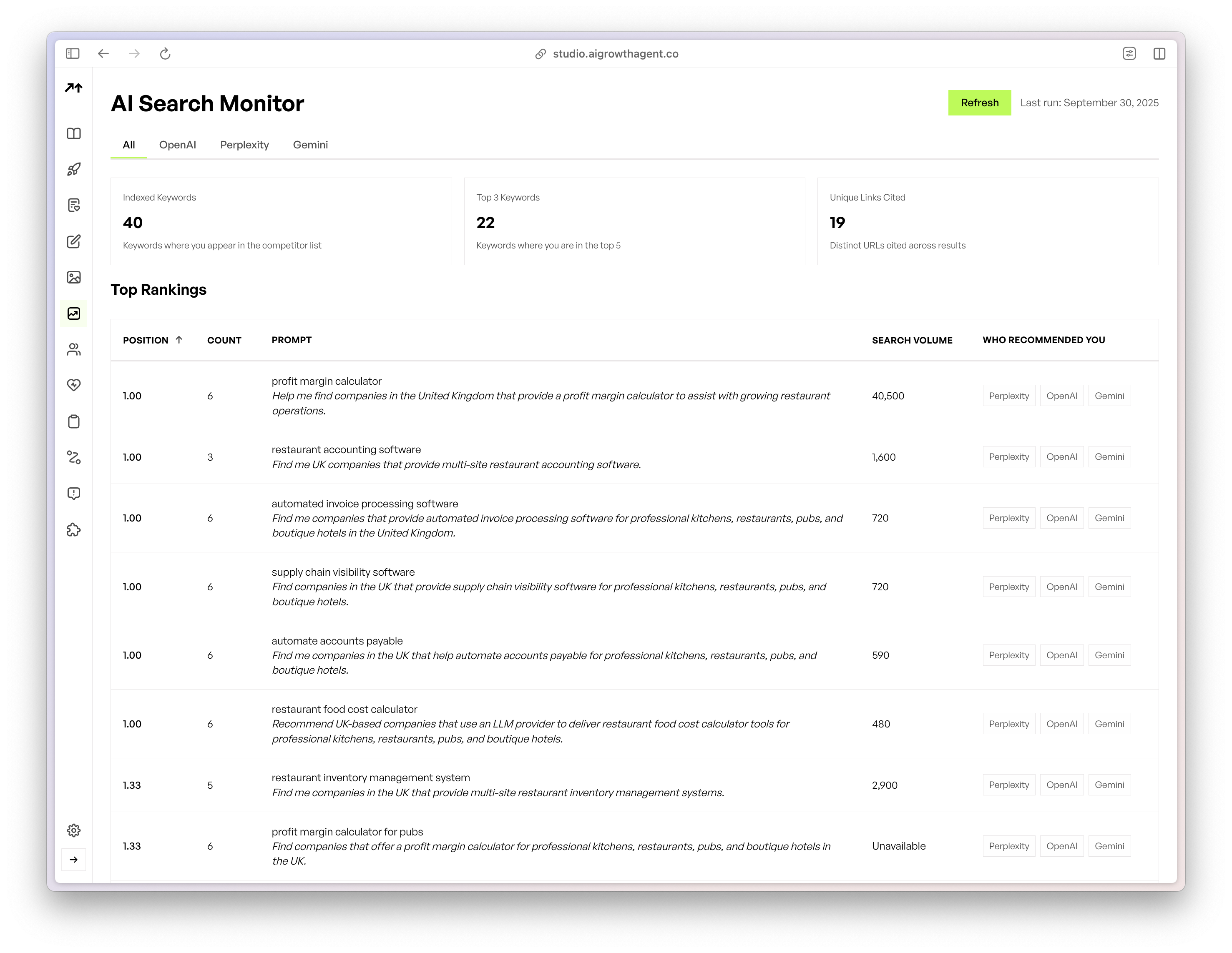
Direct publishing and tracking complete the process. AI Growth Agent posts to optimized blogs and uses AI Search Monitors to check citations and visibility across AI engines, offering data to refine and measure impact.
One thing to note is the upfront effort for detailed onboarding to set up your Company Manifesto and strategy. While this takes more initial resources than basic tools, the long-term savings in time and boosted authority make up for it.
Comparison Table: Key Factors for Choosing AI Content Tools
This table lays out the main points marketing leaders should weigh when picking a solution for AI search authority.
|
Feature/Criterion |
Basic AI Content Tools |
Autonomous AI Platforms |
Business Impact |
|
Strategic Depth |
Limited without custom setups |
Deep keyword planning, brand alignment |
High, shapes content authority |
|
Content Quality |
Often generic unless tailored |
Brand-specific, high-value output |
High, critical for AI citations |
|
Technical SEO |
Needs manual work or add-ons |
Automated schema, indexing protocols |
Critical for AI visibility |
|
Scalability |
Can be restricted at large scale |
Full automation, enterprise-ready |
High, supports daily output |
|
Publishing Ease |
Often requires manual steps |
Direct blog and CMS integration |
Medium, boosts efficiency |
|
Performance Tracking |
Little focus on AI search metrics |
AI citation and visibility monitoring |
High, aids optimization |
|
Cost Structure |
Per-user or tiered pricing |
Value-driven, enterprise focus |
High, affects sustainability |
How Autonomous Platforms Solve Broader Content Challenges
Autonomous systems go beyond basic content creation to address wider marketing hurdles. Slow, costly agencies can’t keep up with the daily pace needed for AI search. AI Growth Agent scales agency-quality work independently, far beyond human limits.
Overloaded internal teams get relief as well. This platform frees staff for big-picture strategy by handling content tasks, so focus shifts away from manual production or technical tweaks.
Basic AI tools often fall short at scale without extra customization. They may lack the strategic depth or automation needed for enterprise content goals. AI Growth Agent stands out with features like:
- Parallel Agent Deployment for managing multiple brands or lines from one hub.
- Real-Time Content Creation to jump on trending topics quickly.
- Custom Data Integration to turn your data into optimized content.
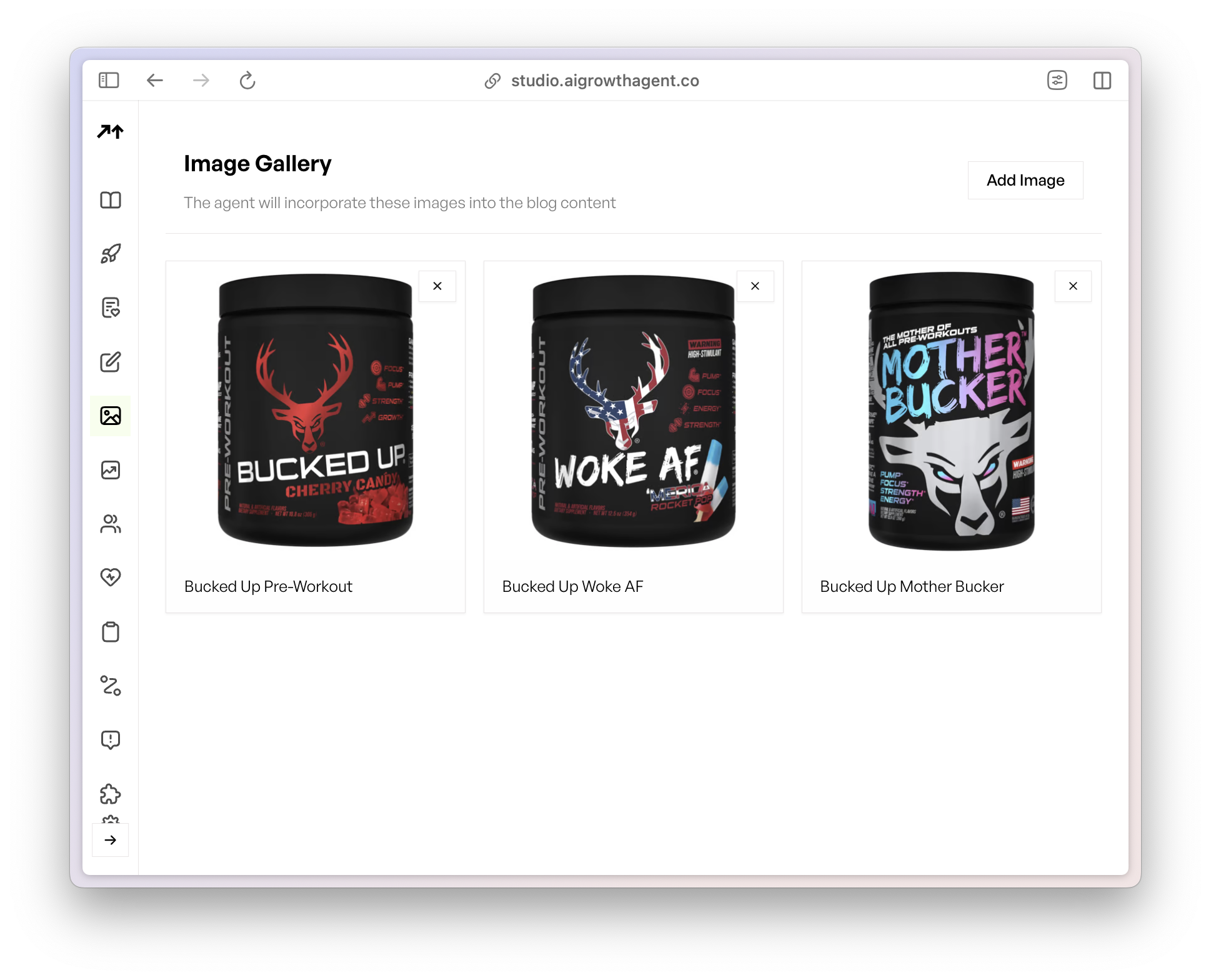
- Intelligent Image Placement for automated, engaging visuals.
Ready to explore autonomous AI content? Schedule a consultation to see if it matches your enterprise authority needs.
Why Acting Now on AI Search Authority Matters
The chance to build AI search authority is slipping away fast. Brands moving early gain benefits that grow over time, making it tough for others to close the gap. Right now, you can position your brand strongly before AI-optimized content floods the market.
Establishing your brand as a trusted source in AI search today creates momentum and preference in algorithms, benefits that become harder to achieve as competition ramps up.
Key Steps for Marketing Leaders Adopting Autonomous AI
Bringing in an autonomous AI platform takes planning and alignment with your goals. Start by assessing your current content setup, team skills, and objectives to find the best fit for AI adoption.
Onboarding often includes setting up a Company Manifesto and strategy framework. Shifting from manual to automated systems requires managing change, with team training on platform use and content oversight.
Factor in both upfront costs and future savings when budgeting. Measure success not just with traditional SEO data, but also AI citation numbers and your position in AI search results.
Common Questions About AI Content and Search Authority
Will Google Penalize AI-Generated Content?
Google judges content on quality, usefulness, and E-E-A-T principles, not on whether AI or humans created it. Platforms like AI Growth Agent focus on producing optimized, valuable content through strategic planning and technical accuracy, supporting a strong online presence.
Can Internal Teams Use Basic AI Tools Effectively?
Basic AI tools help with tasks like drafting or outlining, but they often need significant manual input for planning, accuracy checks, optimization, and publishing without added integrations. Teams may also struggle with the technical know-how for AI indexing. This extra work can hinder the daily output needed for AI search authority. Autonomous platforms handle the full process, easing this load.
How Do Autonomous Platforms Ensure Content Accuracy?
Platforms like AI Growth Agent use multiple checks for accuracy, including research agents that pull from reliable sources before writing. With a defined Company Manifesto and review steps, content stays dependable, outperforming basic tool outputs.
Is AI Growth Agent Similar to an SEO Agency?
AI Growth Agent isn’t a traditional SEO agency or managed service. It’s a technology platform that scales content creation independently through AI agents, offering capacity and consistency beyond human teams.
Why Invest More Initially in Autonomous Platforms?
Autonomous platforms deliver value by building authority systematically. AI Growth Agent cuts down on manual tasks, supports daily high-quality output, and offers advanced optimization that basic tools might lack, providing market gains that outweigh the starting cost.
Final Thoughts: Position Your Brand for AI Search Success
Choosing between basic AI tools and autonomous platforms like AI Growth Agent is a major decision for market leadership in AI search. Only full-scale solutions offer the complete process needed to stand out in AI results.
Marketing leaders who move quickly will lock in advantages that build over time. AI Growth Agent combines strategic planning, independent operation, and technical precision to help brands establish strong category authority.
Don’t let your online presence fade. Strengthen your brand’s position in AI search with AI Growth Agent. Schedule a strategy session now to see if it’s the right fit.